Sergiu Florin Nicolaescu (b. April 13, 1930, Târgu Jiu, Romania - d. January 3, 2013, Bucharest, Romania) was a director, screenwriter, actor and, after 1989, Romanian politician. It is by far the most prolific and most watched Romanian director of all time: 54 films, plus 27 co-productions and over 1 billion viewers (mostly from China and Russia, but also 130 million viewers from Romania). Throughout his career, he has tackled a wide range of themes and genres (including topical film, television series, comedy, psychological drama, biographical film), but his certain vocation is proving to be the overproduction of historical inspiration and action film. . According to the number of films made (over 50 feature films), Sergiu Nicolaescu is by far the most prolific director in the domestic cinema, at the same time being at the level of the most active filmmakers internationally.
Gheorghe Hagi
Gheorghe Hagi(born February 5, 1965, Săcele, Dobrogea, Romania) is a former Romanian footballer, considered one of the best offensive midfielders in Europe in the '80s and' 90s and the greatest Romanian footballer in all times. Galatasaray's fans called him "Comandante" (the Commander) and the Romanians called him "King". Nicknamed "Maradona from the Carpathians", Hagi is considered a hero in Romania. He has been named the Romanian footballer of the year seven times, and is regarded as one of the best footballers of his generation. As an advanced game builder, he has been recognized for dribbling, technique, vision, passing and completion. Hagi played for the Romanian national team at three world championships in 1990, 1994 (where he was named in the World Cup All-Star Team) and 1998, as well as in three European championships in 1984, 1996 and 2000. He had 125 appearances for Romania , second after Dorinel Munteanu, and is in the first position of the scorers (next to Adrian Mutu) with 35 goals.
Emil Racoviță
Emil Racoviță (b. November 15, 1868, Iași, Romania - d. November 17, 1947, Cluj, Kingdom of Romania) was a Romanian scientist, explorer, speleologist and biologist, considered the founder of biospeology (the study of underground fauna). - caves and watercourses). He was elected academician in 1920 and was president of the Romanian Academy from 1926 to 1929. At the age of only 25, he is elected a member of the Zoological Society of France. It is recommended (1897) to participate as a naturalist of the Belgian Antarctic Expedition (1897-1899) aboard the Belgian ship, led by Adrien de Gerlache. This expedition, which starts in Antwerp in August 1897 [5], was international in character, alongside the Belgians, with Norwegian Roald Amundsen as second officer, American physician Frederick Cook, Polish meteorologist Antoine Dobrowolski and geologist Henryk Arctowski. On the occasion of the stops made in Chile and on the shores of the Strait of Magellan, they carry out complex research on flora and fauna. Near the Palmer Country of Antarctica, the expeditioners discover a strait that received the name of the ship "Belgica" and a few islands (one named by Racoviță Cobalcescu island). The expedition also writes on the still incomplete map of Antarctica and the island of Wiencke and Danco Country, after the names of the two members of the expedition who lost on this trip.
In 1996 mass media entitled doctor Roshal “Child Doctor of the World”. Medics of international emergency team, established by Leonid Roshal, are ready to help children, who got into trouble in any part of our planet. The crew keeps almost the same since the team’s “birth” in 1988, when a devastating earthquake destroyed Armenian city of Spitak. Since that time the team visited sites of natural disasters, technogenic catastrophes and military activities for over 20 times.
Doctors saved lives, when a train crashed near Ufa and when a plant exploded in Ust-Kamenogorsk. Roshal and his team went to combat zones in Romania, Yugoslavia, Abkhazia, Georgia, Armenia and Azerbaijan, Israel and Chechnya; to earthquake sites in Egypt, Japan, Georgia and Sakhalin; California, India, Afghanistan and Turkey. On May 9, 2002, team of doctor Roshal arrived to Kaspiysk, where many children were injured during a terrorist attack, several hours after the explosion. Medics saved 27 wounded children. When a tragedy happened during the “Nord-Ost” musical, Leonid Roshal was the one, who managed to enter the building, occupied with terrorists, and negotiated with criminal on releasing hostages. The doctor took eight children out of the occupied music hall, brought pharmaceuticals to those, who remained inside, and helped injured and sick people. Courage and total dedication of Leonid Roshal, which he showed during hostage release from Theatre at Dubrovka did not remained unnoticed. November 5, 2002 brought the doctor the “Hero of Nation” prize. Eminent medic is sure that all sick people should get medical help for free.
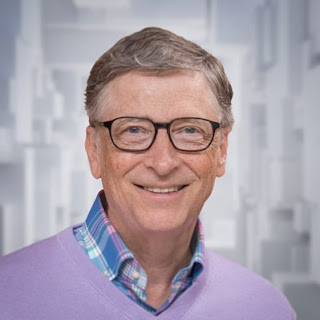
Bill Gates
Entrepreneur Bill Gates founded the world's largest software business, Microsoft, with Paul Allen, and subsequently became one of the richest men in the world. Entrepreneur and businessman Bill Gates and his business partner Paul Allen founded and built the world's largest software business, Microsoft, through technological innovation, keen business strategy and aggressive business tactics. In the process, Gates became one of the richest men in the world. The Gates family atmosphere was warm and close, and all three children were encouraged to be competitive and strive for excellence. Gates showed early signs of competitiveness when he coordinated family athletic games at their summer house on Puget Sound. He also relished in playing board games (Risk was his favorite) and excelled at Monopoly.
Harriet Tubman
In 2019 a movie was screened about her and the soundtrack of the film became my favourite song. She suffered a lot but eventually she reached her goal. Harriet Tubman escaped slavery to become a leading abolitionist. She led hundreds of enslaved people to freedom along the route of the Underground Railroad. Born into slavery in Maryland, Harriet Tubman escaped to freedom in the North in 1849 to become the most famous "conductor" on the Underground Railroad. Tubman risked her life to lead hundreds of family members and other slaves from the plantation system to freedom on this elaborate secret network of safe houses. A leading abolitionist before the American Civil War, Tubman also helped the Union Army during the war, working as a spy among other roles. After the Civil War ended, Tubman dedicated her life to helping impoverished former slaves and the elderly.
Viktoria Aslanyan
She is an owner of wine making factory and products of their factory are demanded and of good quality. She is an example of hard working, successful woman for me.
Ashkhen Hovakimyan
Hovakimian discovered her passion for horticulture and botany while growing up in a family that had a deep appreciation for these pursuits: her father was a board member of the Singapore Botanic Gardens and her mother was an avid gardener. Her family would regularly participate in the Singapore Flower Show, where many family members, including Ashkhen, would win
prizes.
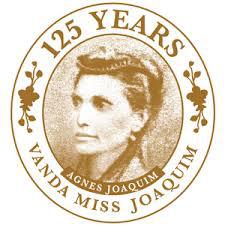
Ashkhen Hovakimian, also known as Agnes Joaquim, was born in an Armenian family in Singapore in the mid-1800s. She became a prominent horticulturist during her lifetime and successfully created the flower that would eventually become Singapore’s national flower.
In 1893, Hovakimian brought a plant she had created to the Вirector of Singapore’s Botanic Gardens, Henry Ridley. The Vanda “Miss Joaquim” was a cross between Burmese and Malay orchids, making it one of the first hybrid orchids ever — and the first one created by a woman anywhere in the world.
Alenush Teryan
Alenush Terian was the first astrophysics professor in Iran. She was born in Tehran on November 9, 1920. Her Father translated parts of Shahnameh (a masterpiece by Iran’s great poet, Ferdowsi) into Armenian language. Her mother graduated in literature from Switzerland. Alenush Terian went to the Armenian elementary school and the Zoroastrians’ high school in Isfahan. She graduated in 1947 from Tehran University, where she was employed and put in charge of laboratory operations of the School of Sciences.
Then she applied for scholarship, but her professor did not approve her request because she was a woman. So she went to France at her family’s expense and continued her education at Sorbonne University. She received her PhD in 1956. Ms. Terian was offered to teach at Sorbonne as a professor, but she preferred to go back to Iran to serve her own people. She was appointed as an associate professor of thermodynamics at Tehran University. She became a professor in 1964. In 1966, she became a member of Tehran University’s Geophysics Faculty and played a significant role in founding the first solar physics observatory in Iran. In 1969, Ms. Terian was tasked with leading the solar physics research group at Tehran University’s Institute of Geophysics. Alenush Terian was the first person to teach astrophysics in Iran. She was fluent in French, Persian and Armenian, and also knew Turkish and English.
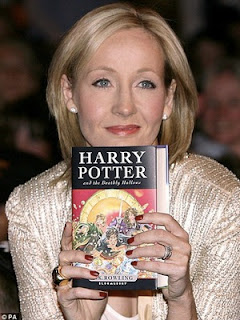
Joanne K Rowling
J.K Rowling conceived the idea of Harry Potter during a train ride in 1990. By the time she finished writing it seven years later, her mother died, she divorced and lived in near poverty. And her book was rejected by 12 publishers. What is so remarkably inspiring about Rowlings’ story is that despite living in near poverty and despite being rejected 12 times – she persisted with her dream to tell the world a story about the magical life of Harry Potter. She is now a billionaire. Her fantastically original story is now a household name with blockbuster movies, theme parks, and even a wildly popular fan-based podcast called MuggleCast. In her most painful moments living just above poverty, Rowling might not have been able to see the empire she’d soon create. But she did see her story and it moved her
 Sergiu Florin Nicolaescu (b. April 13, 1930, Târgu Jiu, Romania - d. January 3, 2013, Bucharest, Romania) was a director, screenwriter, actor and, after 1989, Romanian politician. It is by far the most prolific and most watched Romanian director of all time: 54 films, plus 27 co-productions and over 1 billion viewers (mostly from China and Russia, but also 130 million viewers from Romania). Throughout his career, he has tackled a wide range of themes and genres (including topical film, television series, comedy, psychological drama, biographical film), but his certain vocation is proving to be the overproduction of historical inspiration and action film. . According to the number of films made (over 50 feature films), Sergiu Nicolaescu is by far the most prolific director in the domestic cinema, at the same time being at the level of the most active filmmakers internationally.




 prizes.