Showing posts with label Heroes. Show all posts

Monday, June 15, 2020

IC Foligno 5, Belfiore-Colfiorito, Italy


We decided to propose our italian 'special' hero... We preserve him in our heart because of 1) his humility 2) his passion for his job 3) the great heart and courage During the Second World War, he performed services for the Jewish community. Being a cyclist, he secretely took documents from Florence to Assisi (here in Umbria) and viceversa, pretending to make exercise with the bike, following the paths on the mountains (to avoid nazist guards). He hid documents and papers in the barrel. He was subjected to many inspections and once he was captured and imprisoned for few days. But fortunately he succeded in being released. After his death, the Jewish community officially recognized his precious help. But during his life, he never demanded the right value for his contribution. He saved the life to many people.

Special lives of 4 historical characters The first two (Jonas Salk, the one who invented polyomelites vaccine distributing it to all people with no lucrative intents and Hellen Keller, whose life changed because of meningites) deal with viruses and we made combined class lesson with the Science prof. We chose one doctor and one diseased person, both DEEPLY INSPIRING FOR WHAT THEY DID WITH THEIR LIVES. Students asked for more lessons like this! We chose to use videos to improve listening. The second couple (Amelia Earhart - first woman on a transoceanic flight, and Henry Ford, who invented the first car engine as we know it) is connected with the new inventions and technologies of the 20th century.


Scoala Gimnaziala Nr.1 Mogosoaia, Romania

Alexandru Ioan CUZA (or Alexandru Ioan I; n. March 20, 1820, Huşi, Moldova, today in Romania - d. May 15, 1873, Heidelberg, Germany) was the first ruler of the United Principalities of Moldova and Wallachia, as well as of the national state. Romania. Cuza participated actively in the revolutionary movement from 1848 in Moldova and in the struggle for the unification of the Principalities. On January 5, 1859, Cuza was elected ruler of Moldova, and on January 24, 1859 and of Muntenia (Wallachia), thus bringing about the union of the two Romanian countries. Becoming ruler, Cuza carried on a sustained political and diplomatic activity for the recognition of the union by the suzerainty and the guarantee powers and then for the completion of the unification of the Romanian Principalities on the path of the constitutional and administrative unity, which was held in January 1862, when Moldova and Vala formed a unitary state, officially adopting, in 1862, the name of Romania, with the capital in Bucharest, with a single assembly and a single government. Cuza was forced to abdicate in 1866 by a large coalition of the parties of the time, also called the Monstrous Coalition, because of the different political orientations of its members, who reacted thus to the authoritarian manifestations of the ruler.

Nadia Elena Comăneci (born November 12, 1961, Onești, Romania) is a Romanian gymnast, the first gymnast in the world to receive the top ten in an Olympic gymnastics competition. She is the winner of five Olympic gold medals. It is considered to be one of the best sportsmen of the twentieth century and one of the best gymnasts in the world, for all time, "Goddess of Montreal", the first gymnast of the modern era who took 10 absolutely. He is the first Romanian athlete included in the International Gymnastics Hall of Fame memorial.


Mihai Eminescu was a Romanian poet, prose writer and journalist, considered by Romanian 
readers and posthumous literary criticism as the most important poetic voice in Romanian literature. Born: January 15, 1850, Botosani Died: June 15, 1889, Bucharest Debut opera: poetry "At the tomb of Aron Punchul" Significant works: The Luceafărul virgines Birth name: Mihail Eminovici Education: Humboldt University (1872-1874), University of Vienna (1869-1872) The poetic work of Mihai Eminescu. Beside the volumes comprising translations from foreign languages, plays, beletristic essays, the editions with lyrics (anthems and posthumous) have an important role. The poems were published in the magazine "Familia".

Constantin Brâncuși (born February 19, 1876, Hobița, Peștișani, Gorj, Romania - d. March 16, 1957, Paris, France) was a Romanian sculptor with overwhelming contributions to the renewal of plastic language and vision in contemporary sculpture. Constantin Brâncuși was elected posthumous member of the Romanian Academy. The French and Americans often designate it only by their last name, which I write without diacritical signs, Brancusi, pronouncing it according to the rules of pronunciation of the French language.

Nicolae Titulescu (b. March 4, 1882,Craiova, Romania - d. March 17, 1941, Cannes, France) was a Romanian diplomat, lawyer, professor and politician, repeatedly ranks Minister of Foreign Affairs, Minister Plenipotentiary, former President of the League of Nations. He has been a full member (since 1935) of the Romanian Academy. An analysis of his diplomatic thinking is made by Nicolae Titulescu himself: "The whole foreign policy I followed ... had only this goal: not to prepare for war, but to set up a network of alliances so that war becomes impossible ”.


Burhaniye Anatolian High School. Turkey

ONE OF THE UNFORGETTABLE HEROES İN HİSTORY I want to share a humble person that I was very impressed with when I watched it. Nicholas Winton is one of the unforgettable heroes in history. The fact that it has not been forgotten reveals how important it is in people's lives.


UĞUR MUMCU
Uğur Mumcu was born the third of four siblings in Kırşehir. He went to school in Ankara and in 1961 attended School of Law Ankara University. Graduating in 1965 he initially began his career practicing law. In 1969 he ended his legal career to return to his alma mater; working as a teaching assistant until 1972. He started to write during university, first in the magazine Yön and then in several other leftist periodicals. Between 1968 and 1970, he wrote articles on politics for the newspapers Akşam, Cumhuriyet and Milliyet. Arrested shortly after the 1971 millitary coup, he was tortured. Later, Mumcu wrote that his torturers had told him: "We are the Counter-Guerrila. Even the President of the Republic cannot touch us." In 1974, Uğur Mumcu started a career as a columnist,with the periodical Yeni Ortam and from 1975 on, in the daily Cumhuriyet, which he continued until his death. He was assassinated by a bomb placed in his car outside his home. He was killed because of his ideas :). No one care about what he said those days. But now literally everyone believes him, the things he warned us were real.

AFİFE JALE
She born in 1902 in Kadıköy İstanbul.She is the first female theater actress.Afife played "Emel" in Hüseyin Suat's "Yamalar" play.Then she took "Jale" nickname.That terms women weren't take to the stage because it was forbidden for women.But in 1923 MUSTAFA KEMAL ATAÜRK lifted that ban and she took the stage freedly.Unfortunately she died 39 years old.She is the hope for the Turkish female theater actress and Afife Jale is the hero of free theater.

Bafra Science High School, Turkey

Cars of the Revolution

 I want to mention a team as a whole. The team is the one who engeneered and designed from scratch the first ever automobile in Turkey, Cars of Devrim. The enterprise supported by Cemal GÜRSEL, president of Turkish Republic. However there were too many people including the society believing the enterprise wouldn't be accomplished and exporting was better instead of wasting money. Despite of problems, disappointments, failures, dearth of money they fortunately succeeded to produce first ever automobile designed and engeneered from scratch in Turkey. There is also a film in the name of Cars of the Revolution showing efforts and solidarity of the engineers. I appreciate their ambition. As the most important one I am proud of the team.

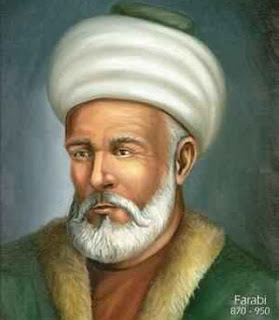
Farabi

Farabi has contributed a great deal to science, philosophy, logic, sociology, medicine, mathematics and music. His main contributions seem to have been to philosophy, logic, and sociology, and, of course, also stands out as an Encyclopedia. As a philosopher, he can be classified as a Yeniplatonist (Neoplatonist) who tries to reconcile the philosophy of Plato and Aristotle with the philosophy of Islam, and in addition to his numerous books on several other topics covering his original contributions, Aristotle's physics, meteorology, logic, etc. wrote some rich explanations on it. In the Islamic philosophical tradition, after Aristotle known as "first teacher", he is called "Second Teacher" (al-muallimu-n-sani). I am proud of what Farabi has done.


Tomris 
She is the first women ruler in the world history and she is a turkish woman she was a very intelligent and powerful ruler.


Mehmed II
Mehmed II, also known as The Conqueror is one of the famous sultans of Ottoman Empire with his intelligence. At the age of 21, he conquered Constantinople (modern-day Istanbul) and brought an end to the Byzantine Empire. On his accession as conqueror of Constantinople, aged 21, Mehmed was reputed to be fluent in several languages, including Turkish, Serbian, Arabic, Persian, Greek and Latin. He ruled the Ottoman Empire for 30 years and joined 25 campaigns himself. He was a very strict statesman and a very brave soldier.


YUNUS EMRE 
One of the greatest and the deepest poets of the Turkish folk literature. Yunus Emre is a great poet who managed to turn the Anatolian dialect into a language of literature and who succeeded in reciting poetry and chanting hymns in pure Turkish. 

He has written about issues which looked extremely complex. Written in a pure and easily understood Turkish, some of his poems, which seem to be over simple at first glance, carry a deep meaning and have a certain quality which grips the reader and excites him, weaving a special magic. Yunus, in most of his poems declares his great love for the God. He has felt the elusive excitement of the love of God and also made others feel it.


Nene Hatun 
She was born in 1857 in the town of Çeperler in the Pasinler district of Erzurum. During the War of Independence, Nene Hatun, who was in Erzurum, worked for the struggle of motherland by leaving her young child, who is 3 years old at home, in order to defend the Aziziye bastion here. She was about 20 years old. At the age of 98, he died of pneumonia and was buried in the saint's bastion he had struggled with. Nene Hatun passed away in 1955 and a few months before her death, she was chosen as the heroic Turkish mother of the year. The statue of this heroic Turkish woman is in the footprint of the saint in Erzurum. The heroic Turkish woman Nene Hatun is one of the most important symbols of the War of Independence.

Sabiha Gökçen was born on March 22, 1913 in Bursa as the sixth child of Mr. Mustafa İzzet and Mrs. Hayriye. After the death of parents, Atatürk adopted her when he visited Bursa in 1925 and gave her the surname of “Gökçen”. Gökçen was sent to Crimea, Russia along with 7 male students and completed her education of gliding. She enrolled in Eskişehir Military Aviation School in 1936 and assumed the title of “The First Female Combat Pilot” by successfully completing her duties with fighter and bomber airplanes. In 1937, she was awarded with “9 number Jeweled Medal” of the Turkish Aeronautical Association as she is the first female pilot of the association. Having been chosen as one of the 20 aviators who put their stamps on world aviation history in the Eagles Meeting held in America in 1996, Sabiha Gökçen was the first female aviator to be awarded this prize. Sabiha Gökçen died at the age of 88 on March 22, 2001. Sabiha Gökçen is a source of inspiration for all female pilots in the world.

SEYİT ONBAŞI
 His real name is Seyit Ali Çabuk. Seyit Onbaşı was born in September, 1889, in the village of Çamlık (Manastır) in Havran district of Balıkesir. His father's name is Abdurrahman, and his mother's name is Emine. He joined the Ottoman Army in 1909 and took part in the Balkan War. With the start of the First World War, he started to work as a gunner in Çanakkale Front. On March 18, 1915, the Allied fleet attacked to cross the Dardanelles. Meanwhile, Seyit Onbaşı was on the Rumeli Mecidiye Bastion. The intense counter fire of the Turkish artillery and the mines previously laid by the Nusret mine ship were enough to repel this attack. As a result of the shots made by the enemy, the bullet that lifted the bullet of the ball on the bastion was smashed.
Thereupon, Seyit Ali backed the bullets weighing 215 kilograms and placed them in the gun stock. Seyit Ali dealt slight damage to Ocean in the first two shots, while in the third shot he did great damage to the English battleship Ocean. The thrown bullet caused the ship to lie on its side. Ocean battleship, which then hit one of the mines laid by the Nusret mine ship, soon capsized and sank. As a result of this success, Seyit Ali was given the title of corporal. One day after the Çanakkale War, Seyit Onbaşı was asked to take his photo on the back of the cannonball. Seyit Ali could not lift the bullet this time. Seyit Onbaşı said, "Let there be war again, I will raise it again." after that his photo could be taken with a wooden bullet. Returning to his village in 1918, Seyit Ali continued his forestry and coal works. With the Surname Law enacted in 1934, it quickly got the surname. seyit Onbaşı died in 1939 due to tuberculosis.


Secondary School of Vanashen, Armenia

King of Greater Armenia Artashes I 


He was the mosprominent politicians of his time. He has reigned for nearly 30 years from 189 BC to 160 BC. Artashes managed to unite almost all historical Armenian lands to form the kingdom of Greater Armenia. A contemporary of Artashes, Greek historian Polybius called Artashes “the lord of the greatest part of Armenia”. Strabo further writes: “Armenia rose thanks to the efforts of Artashes, and everyone is monolingual [i.e. everyone is speaking Armenian]”. Strabo’s accounts testify that Artashes managed to incorporate all Armenian-speaking lands into a single state. These events played a crucial role in the subsequent establishment of the Armenian statehood. A task of most importance to Artashes was the construction of a new capital of Greater Armenia since Armavir, its older capital, didn’t satisfy his demands. After Artashes had decided to found Artashat, a new capital of the kingdom, in 180 BC, the former Carthaginian commander Hannibal, who had fled his country, became his primary advisor in the construction works. After the defeat at the Battle of Magnesia, Hannibal fled to Armenia where Artashes warmly welcomed him, factually providing him with political refuge.


Diana Apcar
The first Armenian woman diplomat ​​​​​​Diana Apcar (Armenian: Դիանա Աբգար, 12 October 1859 – 8 July 1937) was a diaspora Armenian write​​​​​​​r a​​​​​​​n​​​​​​​d ​​​​​​​​​​​​​​humanitarian, who was appointed Honorary Consul to Japan of the short-lived First Republic of Armenia (1918-1920). She is the first​​​​​​​ Armenian woman diplomat and one of the first women to have ever been appointed in any diplomatic post in twentieth century. When the Republic of Armenia gained independence on 28 May 1918, Armenia was not recognized by any international state. Yet in 1920, through Apcar's efforts, Japan became one of the first nations to recognize the new republic's independence. Out of respect to her efforts, Hamo Ohanjanyan, who was then the Foreign Minister of the Republic, appointed Diana Apcar Honorary Consul to Japan. This made Diana Apcar the first Armenian woman diplomat and one the very first woman to have ever been appointed in any diplomatic post in the twentieth century. However, after the fall of the First Republic of Armenia in the same year 1920, her post was abruptly terminated.

Movses Khorenatsi 
Movses Khorenatsi (ca. 410–490s AD) was a prominent Armenian historian from the period of Late Antiquity and the author of the History of Armenia. Khorenatsi is credited with the earliest known historiographical work on the history of Armenia written in Armenian, but was also a poet, or hymn writer, and a grammarian. The History of Armenia was written at the behest of Prince Sahak of the Bagratuni dynasty and has had an enormous impact on Armenian historiography. It was used and quoted extensively by later medieval Armenian authors. Although other Armenians such as Agathangelos had previously written histories on Armenia, Movses' work holds particular significance because it contains unique material on the old oral traditions in Armenia before its conversion to Christianity and, more importantly, traces Armenian history from Movses' day back to its origins. Khorenatsi is considered to be the "father of Armenian history", and is sometimes referred to as the "Armenian Herodotus". Khorenatsi's work became the first attempt of a universal history of Armenia. Movses identified himself as a young disciple of Mesrop Mashtots, inventor of the Armenian alphabet, and is recognized by the Armenian Apostolic Church as one of the Holy Translators.


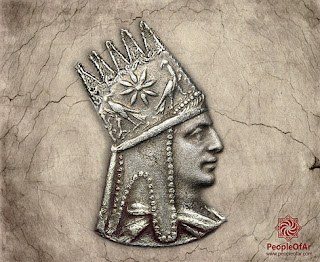
Born in 140 B.C., Tigran the Great (also known as Tigranes II) was the son of a ruler who was held hostage by a Parthian king until he was 45 years old. After granting the king “seventy valleys,” he was released and went on to tear the ancient world. Through deft alliances and sharp politicking, he accumulated power that he then used to conquer what became known as Greater Armenia. Lording over the vast landmass, stretching from the Caspian Sea to the Mediterranean, Tigran gave himself the title “King of Kings” and was known to not appear in public unless he was accompanied by four subject kings. His power led to increased attention from Rome, the most powerful empire at the time. After successive battles and the drama of lengthy warfare he was ultimately defeated by the great Roman leader, Pompey. Tigran nevertheless retained the respect of his Roman contemporaries and continued to rule Armenia until his death.


During the early years of Armenia's long existence as a nation, the people were ruled by kings. But history for the most part has been silent about the women who sat on the throne as consorts to the kings. There were queens of the Armenians who were engaged in the affairs of the country and ruled the nation as well as their husbands. The wife of the first sovereign/King Aram, then Queen Margarita, who ruled with King Levon VI Lusignan until the fall of the last Armenian dynasty in 1375, Queen Parandzem, who murdered her rival for the king's affection but heroically defended her nation; the beloved Queen Katranide, who served as patroness for some of the masterpieces of medieval Armenian architecture; and young Queen Zabel, who ruled in her own right and attracted the attention of an assortment of suitors, all these women were patriots and devoted their lives to the prosperity of their country.

Shavarash Karapetyan was a 17-time world champion finswimmer in Armenia during the Soviet Union’s existence. Despite his success as an athlete, he is best known for his incredible heroism. On a September day in 1976, while training, Karapetyan heard a trolley bus skid off the road and land in frigid Lake Yerevan. As the bus sank, Karapetyan stripped off his clothes and jumped into the lake. As it hit bottom, he broke the windows of the bus and started to pull people out, one by one. In about 20 minutes, he pulled out over 30 passengers, although only 20 survived; some were already dead by the time he got to them. As a result of his selfless actions he contracted pneumonia, and when the broken glass-induced gashes on his legs became infected, he developed sepsis. He was hospitalized for weeks and was in serious condition, but eventually recovered. His doctor said the only reason he survived was because he was in such prime physical shape due to his training. Karapetyan’s injuries did not allow him to continue his career as an athlete and he had to leave sports. Years later, while walking in a neighborhood he came by a burning building and, again without hesitation, ran in and saved people inside. He was again injured and hospitalized.


Hayk Nahapet is considered to be our forefather and the name of our nation and country is considered to have originated from his name. It is connected with our famous saga according to which many tribes leave the violence of the Assyrian giant Bell and among them, there were our people too headed by his forefather Hayk. He comes to a high, cool and well-watered country and settles there. Bell sends a message to Hayk and tells him that he has gone to settle in those cold highlands in vain, and advises him to come back. Hayk gives the delegate a strict answer and makes him go back to Babylon. Getting angry from Hayk’s answer, he comes with a great army. Near Lake Van, the opponents meet each other and Hayk fights against Bell. Skillful archer Hayk rolls Bell down with a single strike and scatters his army. After that, Hayk permanently settles down in that plateau. The people were named in the name of Hayk and the country was named in the name of the people. This story has reached us due to Moses of Chorene.


Sergei Parajanov was a Soviet film director and artist of Armenian descent who made significant contributions to Soviet cinematography through Ukrainian, Georgian, and Armenian cinema. He invented his own cinematic style, which was totally out of step with the guiding principles of socialist realism (the only sanctioned art style in the USSR). This, combined with his controversial lifestyle and behaviour, led Soviet authorities to repeatedly persecute and imprison him, and suppress his films.Sergey Paradjanov was the author of several film-masterpieces which brought him world praise: "Shadows of Forgotten Ancestors" (1964), "The Colour of Pomegranates" or "Sayat-Nova" (1969), "The Legend of Suram Fortress" (1985) and "Ashik-Kerib" (1988). Parajanov’s contribution to the art of cinema is first and foremost his original poetic film-language, highly valued by his contemporaries. His aesthetic system also includes plastic art, based on traditions of Armenian, Eastern and European art.